Small Cancer Trial Resulted in Complete Remission for All Participants

The results are promising, but experts say the trial should be replicated to know true response rate.
A very small trial of rectal cancer patients has produced unprecedented results: remission in 100 percent of its participants. The findings were published this week in The New England Journal of Medicine. “I believe this is the first time this has happened in the history of cancer,” Luis A. Diaz Jr., an oncologist at Memorial Sloan Kettering Cancer Center and author on the new study, tells the New York Times’ Gina Kolata.
The trial was funded by the company GlaxoSmithKline, which developed a drug called dostarlimab, reports the Times. Patients in the trial took dostarlimab, an immunotherapy medicine that spurs patients’ immune systems to attack their cancers, every three weeks for six months. All 12 participants had similar mutations in what’s called mismatch repair-deficient colorectal cancer, which occurs in about 5 to 10 percent of colorectal cancers, per the study. These tumours tend to respond poorly to standard chemotherapy.
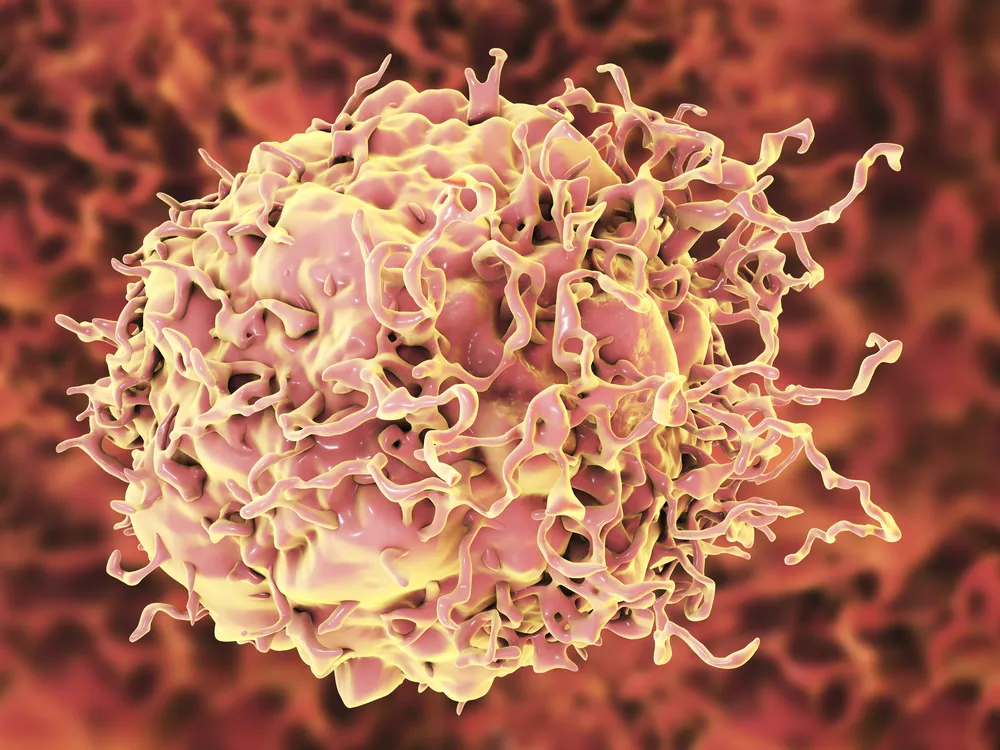
Dostarlimab is an antibody that targets a protein called programmed cell death 1, or PD-1. PD-1 exists on the surface of T-cells produced by the immune system and helps the body recognize and destroy cancer cells. Cancer cells, in turn, can produce molecules that block PD-1 and evade detection by the immune system. Dostarlimab works by preventing this evasion by cancer cells, allowing the immune system to detect and decimate cancer cells.
Traditional colorectal treatments can have life-changing impacts, Hanna Sanoff of the University of North Carolina’s Lineberger Comprehensive Cancer Center, who wasn’t involved in the study but wrote an editorial about the research, tells NPR’s Sacha Pfeiffer and Jonaki Mehta.
PD-1 takes part in a broader biological process called “checkpoint inhibition,” a sort of on/off switch for immune cells. Targeting PD-1 and other parts of checkpoint inhibition for cancer treatment is currently one of the most active areas of research in oncology.
Article continues below
How likely would you be to participate in a clinical trial that your doctor recommended?
Tap on your answer, then tap ‘Vote’
“These results are cause for great optimism, but such an approach cannot yet supplant our current curative treatment approach,” Sanoff writes, adding that the trial should be replicated. “What I’d really like us to do is get a bigger trial where this drug is used in a much more diverse setting to understand what the real, true response rate is going to be,” she tells NPR. “It’s not going to end up being 100 percent. I hope I bite my tongue on that in the future, but I can't imagine it will be 100 percent. And so when we see what the true response rate is, that’s when I think we can really do this all the time.”